

Medical Oncology in İzmir
This page is for people considering a medical oncology consultation in İzmir: what medical oncology is, which branch of oncology does what, how a first consultation unfolds and how a second opinion works.
- Balçova İzmir — consultation address
- 3 languages Turkish · English · Russian
- 2nd opinion review of an existing treatment plan
What does a medical oncologist do?
Medical oncology is the specialty concerned with the drug treatment of cancer. Chemotherapy, targeted therapies, immunotherapy and hormonal treatments all fall within the medical oncologist's remit.
The medical oncologist is also the physician who follows the process as a whole: determining the stage of the disease, building the treatment plan, measuring the response to treatment, managing side effects and setting the follow-up schedule after treatment ends.
This is why the physician a person with a cancer diagnosis sees most regularly is usually the medical oncologist — even though surgery belongs to the surgeon and radiotherapy to the radiation oncologist, the plan as a whole is held in one pair of hands.
Oncology has three separate branches
This is what patients most often confuse. All three are called "oncology", but they do different work — and for most patients all three work together.
-
Drugs
Medical oncology
The drug treatment of cancer: chemotherapy, targeted therapies, immunotherapy and hormonal treatments. This is the branch that builds the overall plan and follows the process.
-
Radiation
Radiation oncology
The treatment of cancer with radiation. Used to shrink a tumour before surgery, to reduce the risk of residual disease after surgery, or to relieve symptoms such as pain.
-
Surgery
Surgical oncology
Removal of the tumour by operation. It is carried out by the surgeon of the relevant field — breast surgery, gynaecologic oncology surgery, general surgery and so on.
Multidisciplinary tumour board
No single physician decides alone
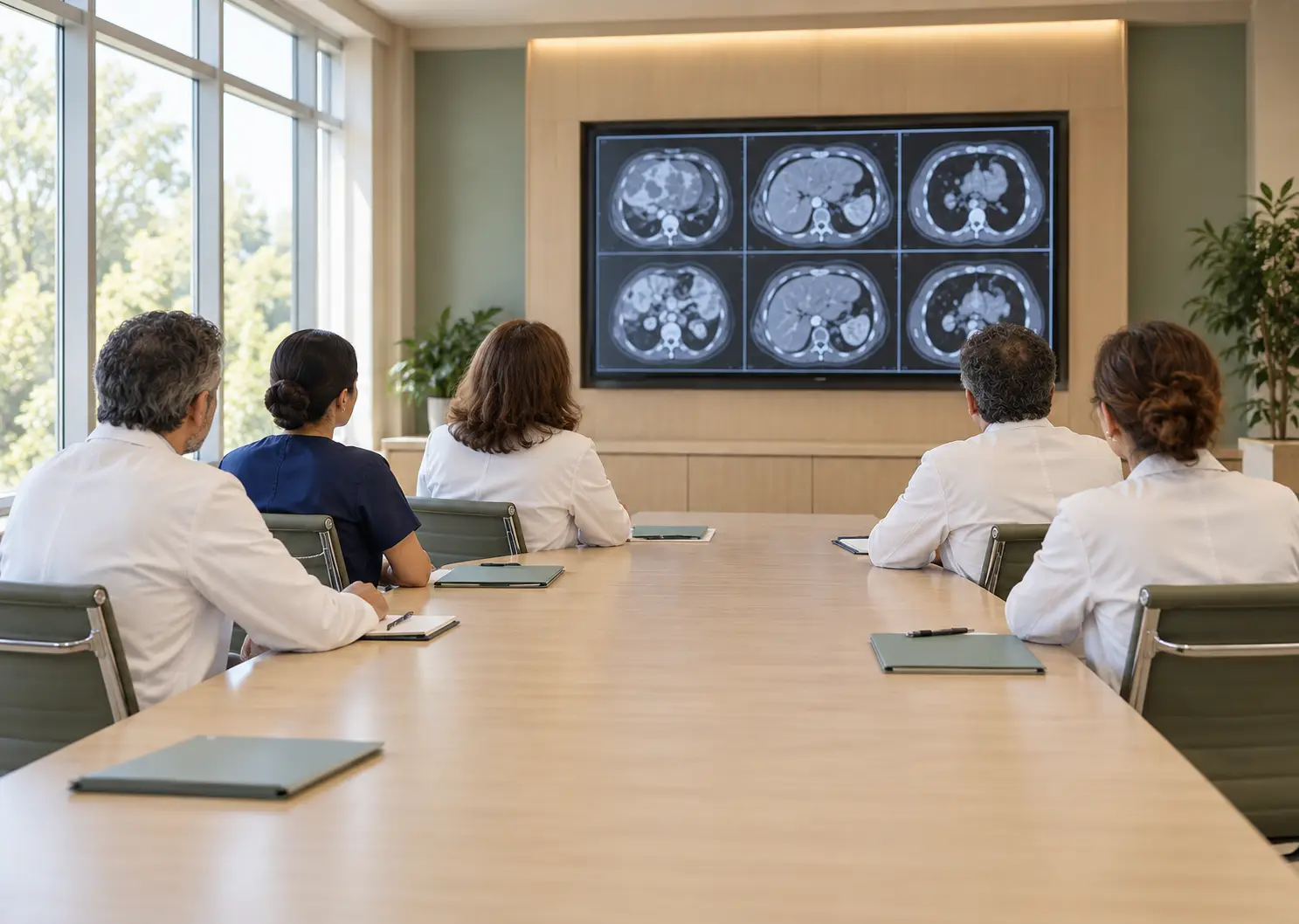
In cancer treatment the plan is not set by one physician's decision but at a tumour board meeting. Around the table sit the medical oncologist, the radiation oncologist, the surgeon of the relevant field, the radiologist and the pathologist.
Each looks at the same file through their own window: the pathologist at the tumour type, the radiologist at its spread, the surgeon at whether it can be removed, the oncologists at the place of drug and radiation therapy. The plan comes out of that shared assessment.
The structure works in the patient's favour: more than one specialist reading the same file prevents the gaps a single point of view can leave.
- Pathologist — tumour type and biological features
- Radiologist — spread of disease and imaging findings
- Surgeon — the role and timing of surgery
- Radiation oncologist — whether radiotherapy is needed
- Medical oncologist — drug treatment and the process as a whole
How a first consultation unfolds
Every physician works a little differently; the sequence below shows the general shape.
-
01
History
When the symptoms began, past illnesses, current medication and family history of cancer are discussed. This part takes longer than people expect, because the plan rests on it.
-
02
Reviewing the documents
The pathology report, imaging studies and blood results are reviewed together. If your documents are complete, this is the fastest part of the consultation.
-
03
Examination and missing tests
A physical examination is performed, and any tests still missing for staging are requested. In some cases the pathology sample needs to be re-evaluated.
-
04
Explaining the plan
Treatment options, their expected benefit, possible side effects and the schedule are explained. Do not hesitate to ask questions here; asking again about something you did not follow is your right.
What is useful to bring
The documents you bring are the single biggest factor in how far a first consultation can go. A complete file prevents the same tests being ordered again and the delays of weeks that follow.
Bringing what you have is enough; whether anything missing is actually needed is decided during the assessment. Bringing digital copies of imaging studies (CD or USB) helps in the cases where the written report alone is not sufficient.
Second opinion
Asking for a second opinion is not distrust of your physician
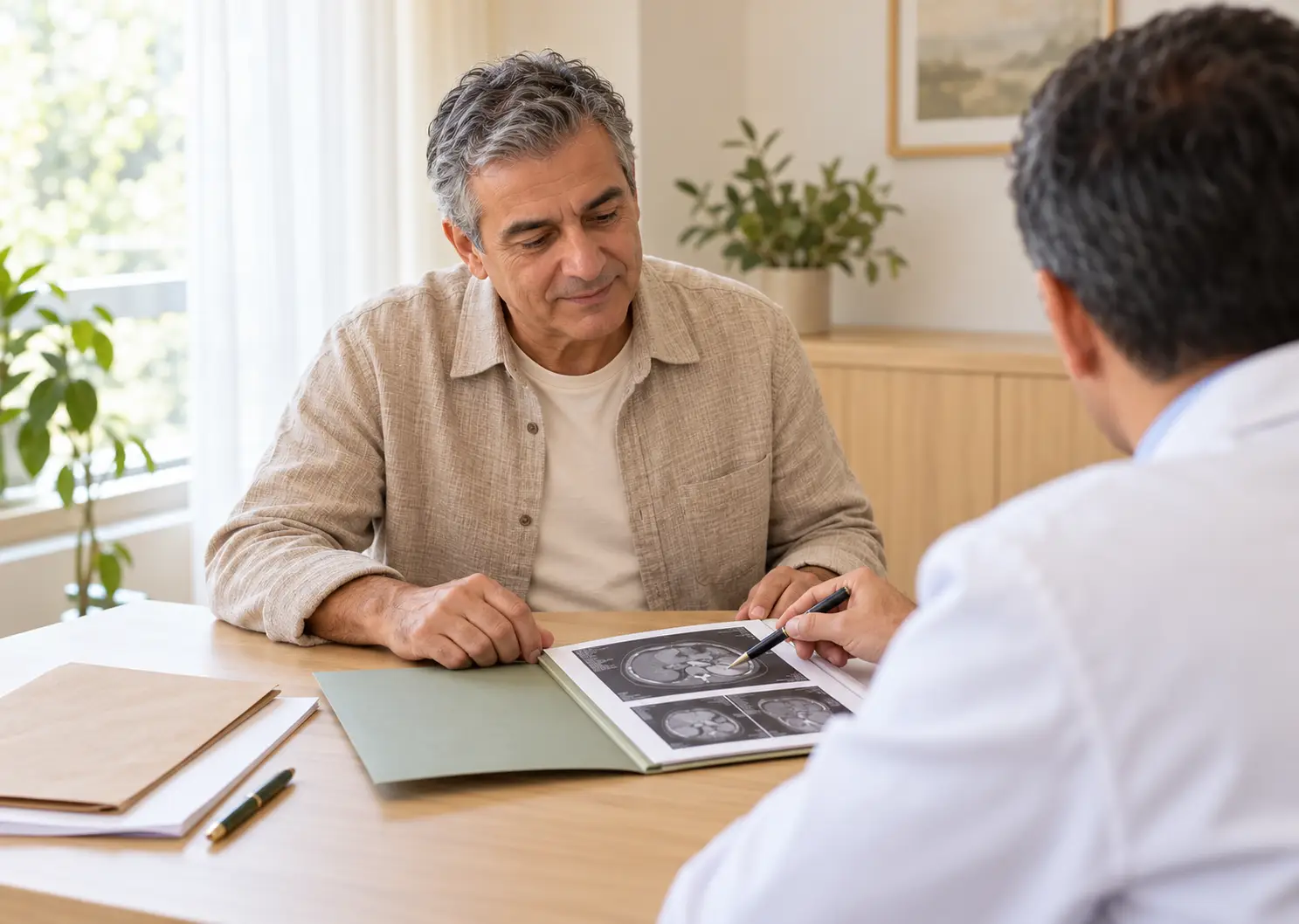
A second opinion is a routine step in cancer care everywhere in the world. A second specialist reading the same file most often confirms the same plan — which lets the patient begin treatment with more confidence.
In some cases an additional option does come up: a different sequence of drugs, eligibility for a clinical trial, or re-evaluation of the pathology sample.
You do not need to interrupt your treatment to get a second opinion. What matters is arranging the consultation before the point of decision, and with your documents in hand.
- Review of the existing treatment plan
- Re-evaluation of staging and of the pathology result
- Discussion of alternative treatment sequences
- Advice on managing side effects
- Plain-language explanation of anything unclear
Where and how to get there
The consultation address is in the Balçova district of İzmir: Teleferik, Sakarya Cd. No:153, 35330 Balçova / İzmir. The map point and directions are on the contact page.
For those travelling from outside İzmir, or seeking a second opinion while being treated in another city, the consultation runs on the documents you bring — so completing your file before you travel saves time.
Frequently Asked Questions
Can I see an oncologist in İzmir without a referral?
That depends on the institution. A private consultation can be arranged directly; in hospital oncology clinics the appointment and referral rules vary with how the institution works. The surest route is to call the place you have in mind and ask.
Medical oncologist, surgeon or radiation oncologist — which one should I see?
If no diagnosis has been made yet, the first step is usually the branch your complaint concerns — for a palpable breast lump, breast surgery or general surgery. Once a diagnosis is made, the physician who runs the process is the medical oncologist. The three branches are not alternatives to each other; they are parts of the same plan.
I am being treated in another city — can I get a second opinion in İzmir?
Yes. A second opinion does not require you to leave the place where you are being treated. Having the pathology report, imaging studies and a record of the treatments given makes the consultation far more productive.
Can the consultation be held in a language other than Turkish?
The content on this site is offered in Turkish, English and Russian. You can ask in advance, via the contact page, which language a consultation can be held in.
How do I make an appointment?
You can leave a message through the form on the contact page or call. The appointment link is on the same page.
If you have questions
For your diagnosis, your treatment options or a second opinion you can get in touch and book an appointment.